
Breaking Down the Horror: How Shadow’s Whisper Redefines Psychological Terror
Updated: Mar 17
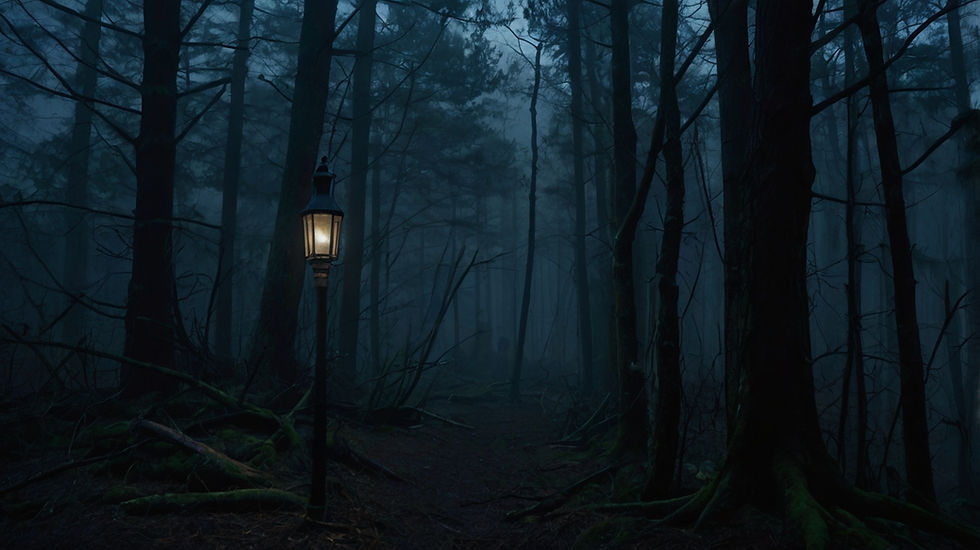
Shadow’s Whisper is a haunting symphony of fear, a film that doesn’t just scare but lingers in the deepest corners of your mind long after the screen fades to black. Directed by James Holloway and penned by Claire Benton, this horror masterpiece embraces the eerie beauty of silence, weaving an unsettling tale where shadows breathe, and whispers hold secrets older than time itself. From the opening frame, the film submerges the audience in a world where reality twists and the unseen is far more terrifying than what meets the eye.
Set in a remote English village, the story follows Eleanor Carter, a young journalist played with raw intensity by Isabelle Reed, who arrives to investigate a series of disappearances linked to an abandoned manor at the town’s edge. The house, long whispered about in local folklore, has stood undisturbed for centuries, its darkened windows watching over the village like hollowed eyes. From the moment Eleanor steps foot on its creaking wooden floors, a creeping sense of dread wraps around her like a cold mist. Doors move when no one is near. Shadows shift ever so slightly. And then come the whispers—soft, unintelligible at first, but soon forming words, names, pleas, and warnings from voices that have long since left the world of the living.
James Holloway’s direction is a masterclass in atmospheric horror. Instead of relying on cheap jump scares, he builds an unrelenting tension that crawls under the skin. Every shot is meticulously composed to make the viewer feel as if they, too, are being watched, trapped in a house that breathes with malevolent intent. The cinematography, handled by Victor Langley, drenches the film in muted, shadowy hues, where the interplay of light and darkness becomes its own character. Candlelight flickers ominously, casting dancing figures along the walls, while deep, inky voids lurk at the corners of the frame, threatening to swallow both Eleanor and the audience whole.
Isabelle Reed’s performance as Eleanor is nothing short of mesmerizing. She perfectly encapsulates a woman unraveling at the seams, her skepticism giving way to a terror she cannot explain. Her expressive eyes, wide with both curiosity and creeping fear, pull the audience into her descent as she pieces together the house’s tragic past. Opposite her, veteran actor Richard Ewan delivers a chilling performance as Father Alden, the village priest who knows far more about the manor’s secrets than he dares to admit. His every word carries the weight of someone who has seen horrors beyond comprehension, and his presence adds a layer of unease that keeps the tension thick.
Sound design plays an integral role in making Shadow’s Whisper a truly immersive nightmare. The whispers, layered and distorted, seem to seep from every corner, some as soft as a breath against the ear, others sharp and demanding. The creak of floorboards, the distant sound of children’s laughter fading into sorrowful wails, and the rhythmic ticking of an old grandfather clock create an eerie symphony that keeps the audience in a constant state of unease. Complementing this is an evocative score by Eleanor Hastings, which blends melancholic piano melodies with low, reverberating strings that seem to pulsate like a heartbeat within the walls.
As Eleanor delves deeper into the manor’s past, the film reveals its true horror—not through grotesque imagery, but through psychological torment. The house is not merely haunted; it is alive, feeding on the grief and pain of those who dare to enter. The film’s climactic revelation is both heart-wrenching and horrifying, a moment where the line between the living and the dead dissolves entirely. The final scene, a lingering shot of the empty manor, silent once more, leaves the audience with an overwhelming sense of dread. Did Eleanor ever truly leave, or did the house claim another soul to whisper its secrets?
Shadow’s Whisper is not just a horror film—it is an experience, a beautifully crafted nightmare that preys on primal fears and lingers in the subconscious. With its masterful direction, spine-chilling performances, and an atmosphere thick with dread, it cements itself as one of the most unsettling films of recent years. It is a reminder that true horror is not in what we see but in what lurks just beyond our perception, waiting, whispering.
If you want to submit your film for a review, contact us!


header.all-comments